
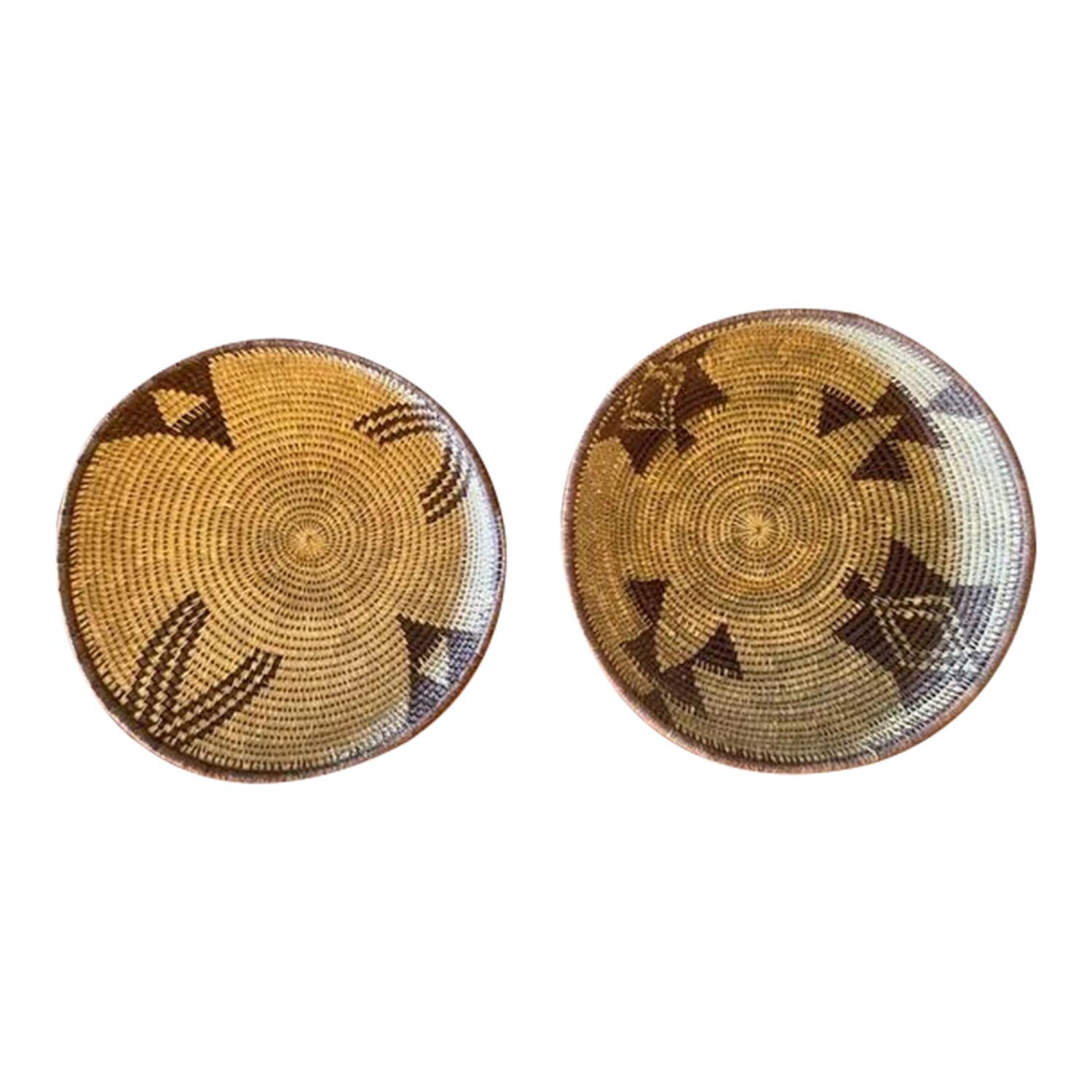
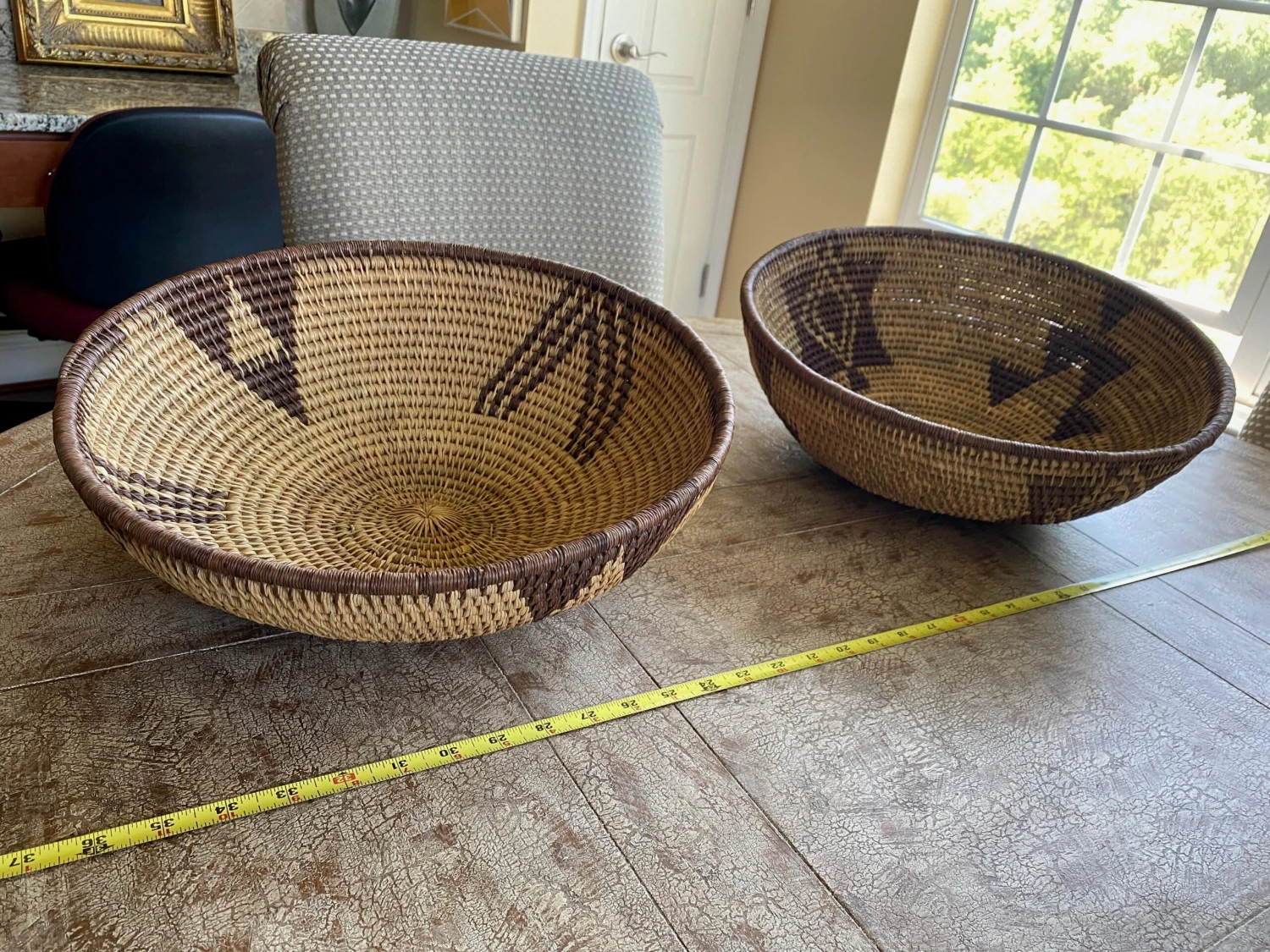

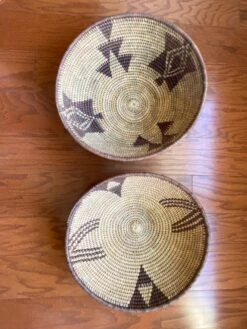
Large Papago Basketry Bowls With Rare Hand-Stitched Hide Bottom – Set Of 2
Original price was: $365.00.$98.99Current price is: $98.99.
- 7-Day Returns, 100% Quality
- Get the Best for Less
- Fast and Secure Payments
- Peace of Mind with Every Purchase

Set of 2 HUGE Vintage handwoven Papago/Tohono O’Odham Bowl Baskets have geometric designs and especially high quality well-made collectibles with …
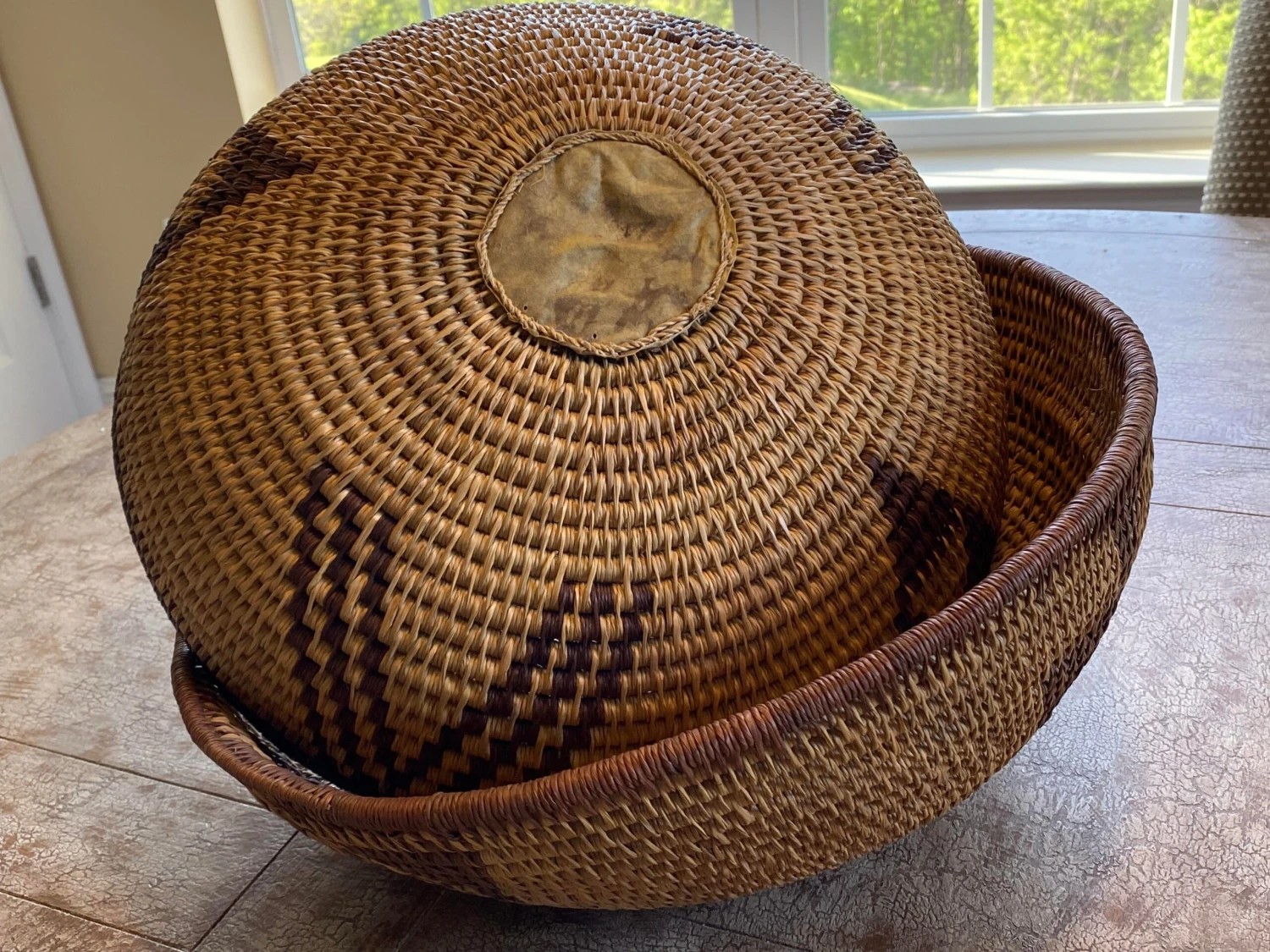
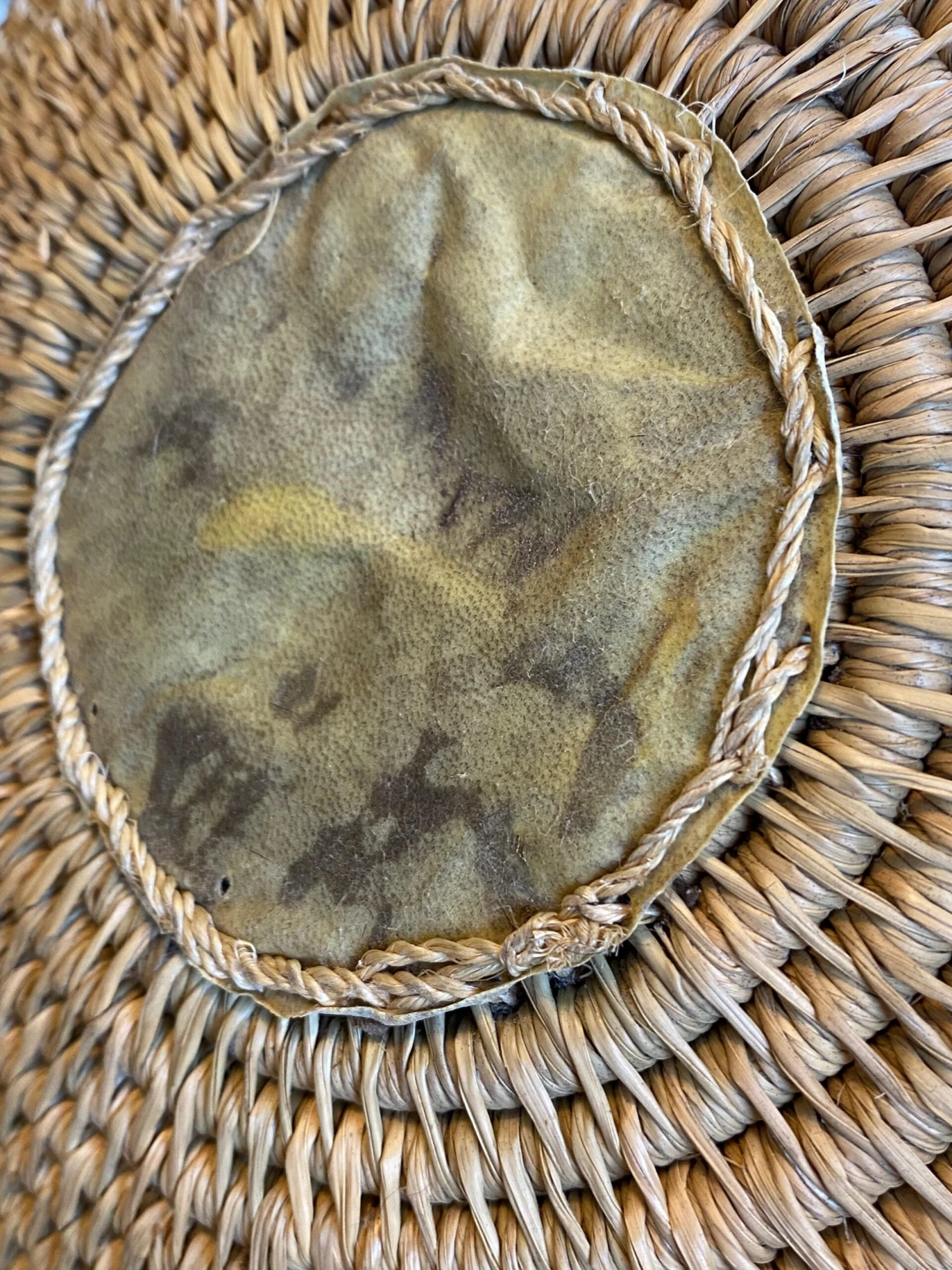
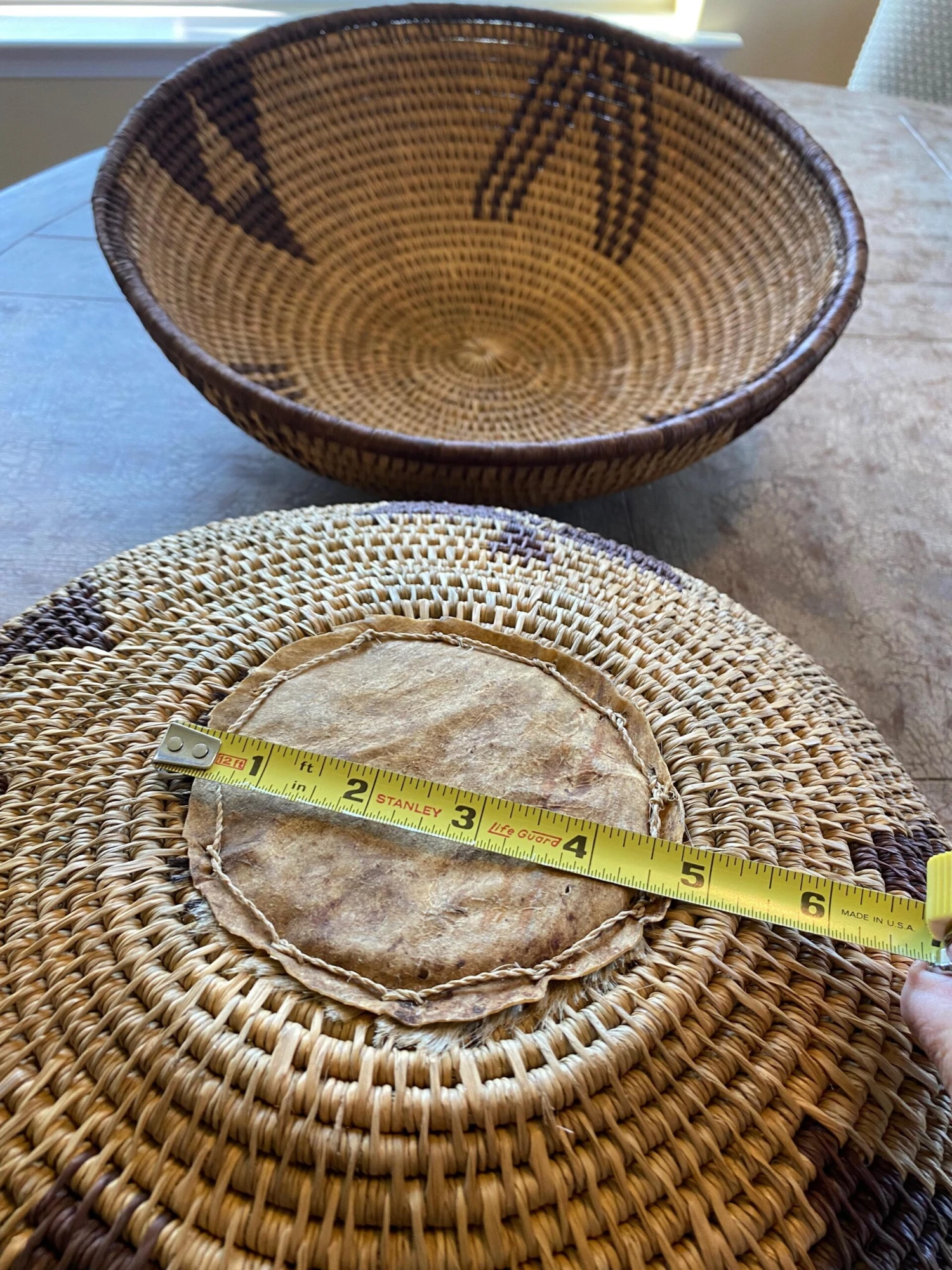
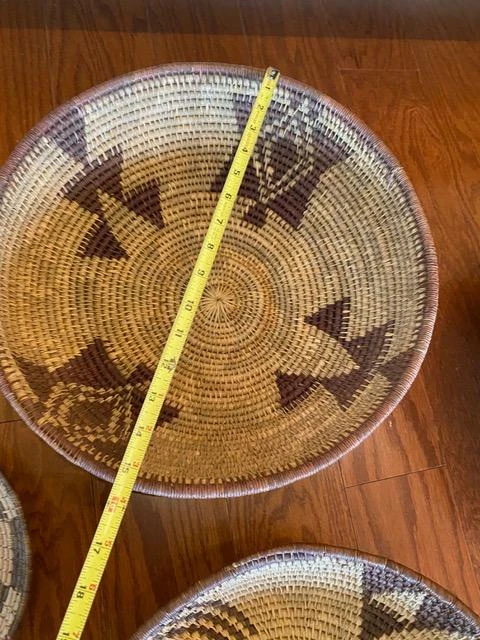
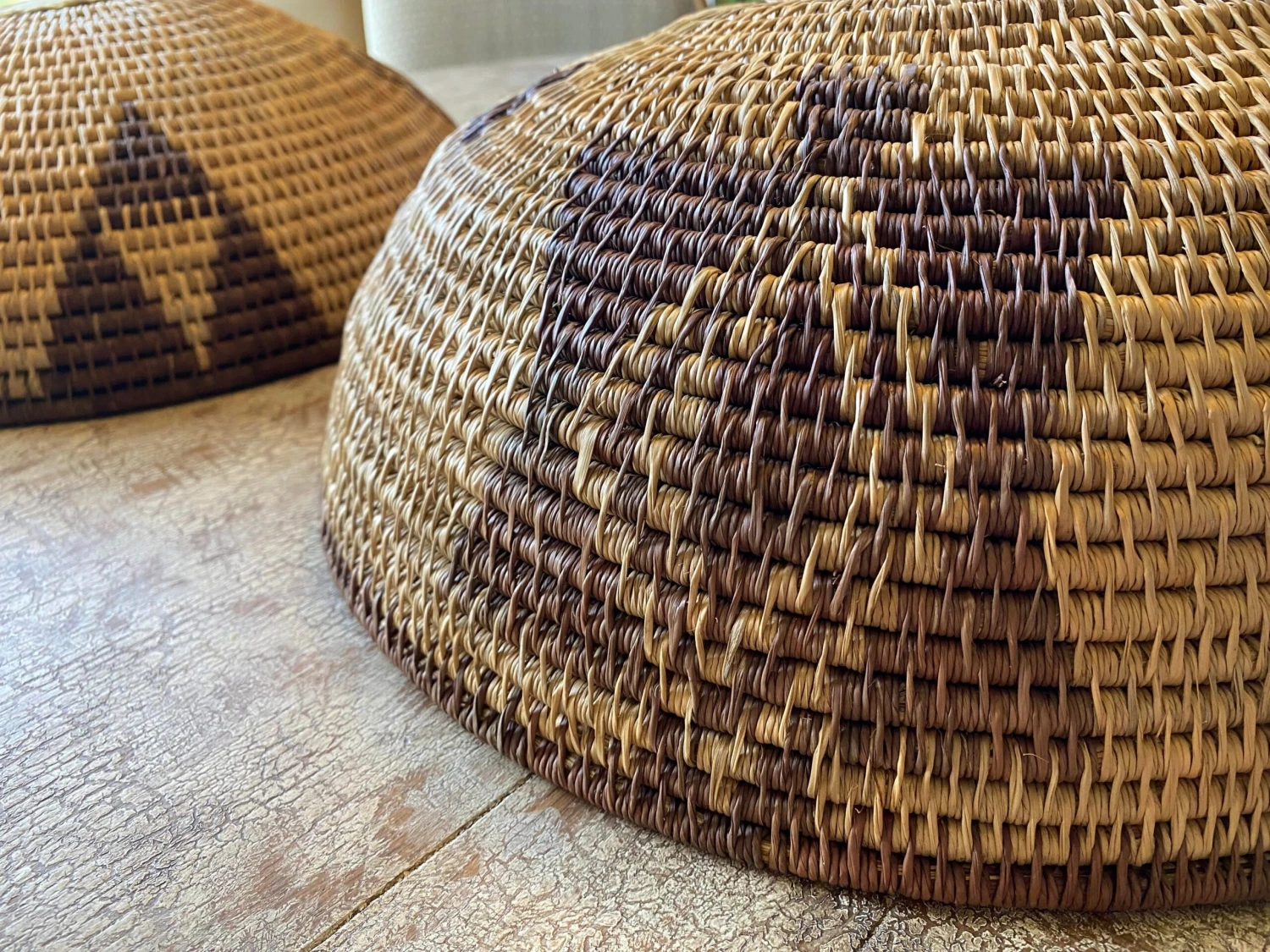
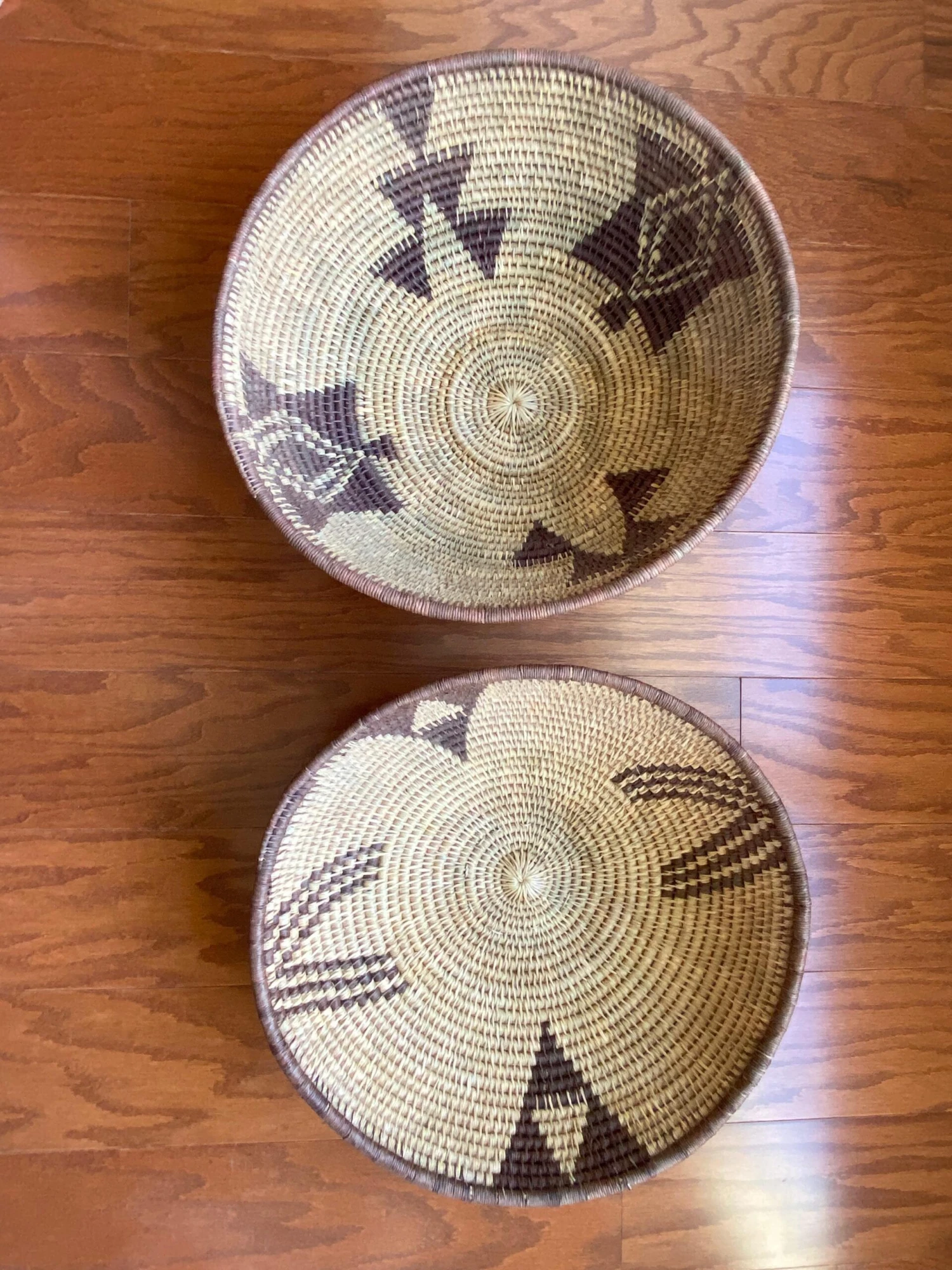
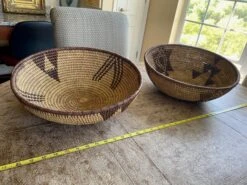
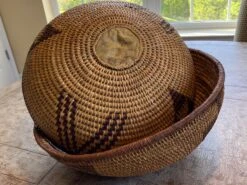
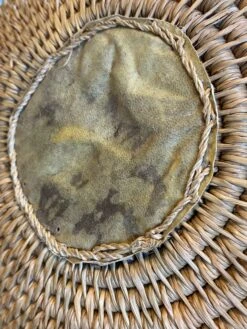
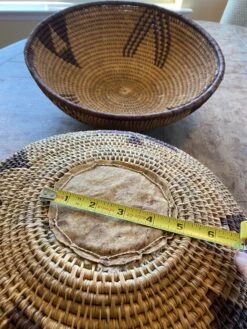
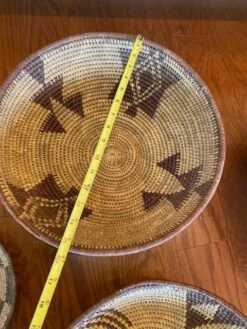
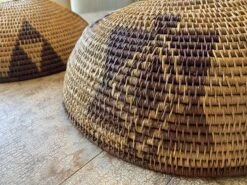
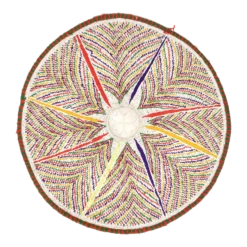
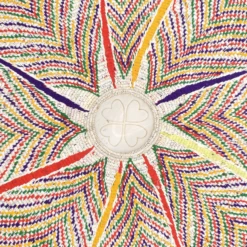
Set of 2 HUGE Vintage handwoven Papago/Tohono O’Odham Bowl Baskets have geometric designs and especially high quality well-made collectibles with VERY RARE hand sewn hide reinforced bottoms. Fine collection of two EXCELLENT condition Papago Indian baskets.
Indian design weaved throughout the Basket. The Tohono O’Odham Reservation is located West of Tucson, Arizona. The Tohono O’Odham used to be called the Papago, which means “Bean Eaters” in Spanish, which the Tribe took as an insult. A number of years ago, the Tribe launched a public relations campaign, and ever since, have been referred to as the Tohono O’Odham, which means “Quiet People”, and suits them very well.
Papago Pima Baskets
When the Spanish colonists first arrived, they named the two groups of Native Americans that were dwelling in present day Arizona in the United States and Sonora Mexico. They were labeled the “Lower Pima” and the “Upper Pima”. The Upper Pima Indians lived on the northern edge of Spanish colonization with the Apache above them, and included the Papago, Gileno, Sobaipuri, and Soba. The Sobaipuri and Soba are no longer in existence today. However, the Gileno, which were named for the Gila River in the state of Arizona, are now known as the Pima, which is a shortened Hispanic word for pi am ha’icu ,meaning “Not Something, Nothing”. They reside only in the United States. In Arizona the Papago, or “Tepary Bean People” as the Spanish called them in 1748, changed their name to the Tohono O’odham, or “Desert People”. The Papago in Sonora Mexico still call themselves Papago.
Between the cradle and the grave, baskets have been produced to serve in all aspects of traditional life. Pima and Papago , or Tohono O’odham, baskets were used for carrying, defense, adornment, furniture, culture and fine art, preparation and serving of food, religious ceremonies, war, carrying water, and social life among other things.
Even in museums the terms “Pima basketry” and “Papago basketry” are used interchangeably; however, there are some notable differences. The art of basketry is comprised of cultural choices and determined by historical processes that are unknown to us. Due to certain environmental conditions, the Papago and Pima did not have access to the same materials needed for their weaving. The Papago were surrounded by harsh, dry vegetation with an abundance of martynia. On the other hand, the Pima were surrounded by willow and cottonwood; therefore, most often a Papago Indian basket would be woven with dark martynia and a willow design. The Pima Indian basket would be woven in willow with a dark martynia pattern.
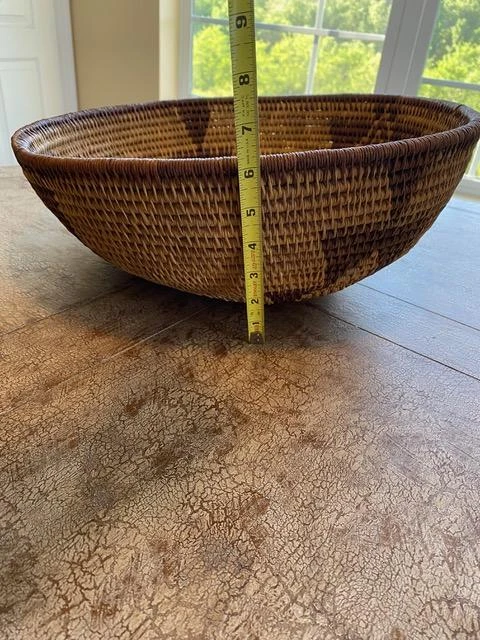
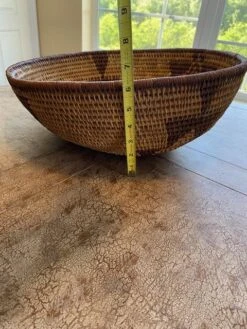
Both the Southwest Papago Indians and Pima Indians used similar techniques to create their Native American Indian baskets which include lattice and plain wrapped weaving, coarse, fine, and crude foundation coiling, lace coiling, and plaiting. However, shape and design of these two groups of Southwestern Indian basketry differ. The Papago bowl baskets have a globular shape, and their width exceeds their height.
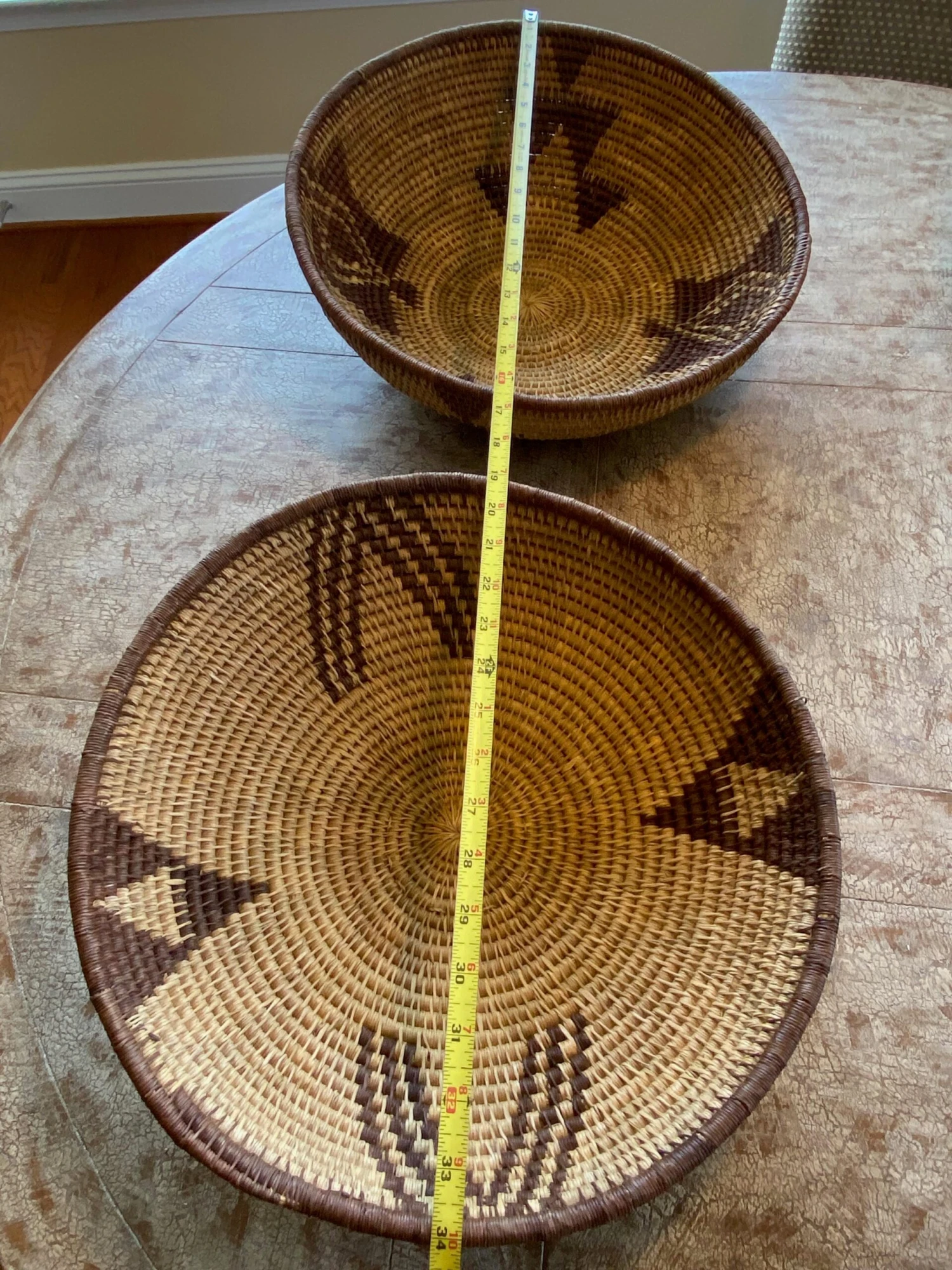
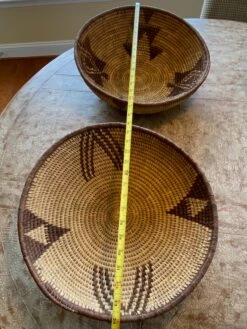
Handwoven vintage baskets like this in much smaller sizes go for MANY hundreds of dollars. These are extremely large, at least 2- 3 times the size of more common sizes and are hard to find in as good of condition as this set.
Kept in No smoking home.
Please review all of the photos as they are a big part of the description.
- Dimensions
- 16ʺW × 16ʺD × 6ʺH
- Styles
- Period
- 1960s
- Item Type
- Vintage, Antique or Pre-owned
- Materials
- Hide
- Ornamental & Decorative Materials
- Pima
- Condition
- Good Condition, Original Condition Unaltered, Some Imperfections
- Color
- Tan
- Tear Sheet
- Condition Notes
EXCELLENT condition especially considering size and age. Fine collection of two Papago Indian baskets.
EXCELLENT condition especially considering size and age. Fine collection of two Papago Indian baskets.
Be the first to review “Large Papago Basketry Bowls With Rare Hand-Stitched Hide Bottom – Set Of 2”
Related products
Baskets


Baskets
Reviews
There are no reviews yet.